Category: Comparison
-
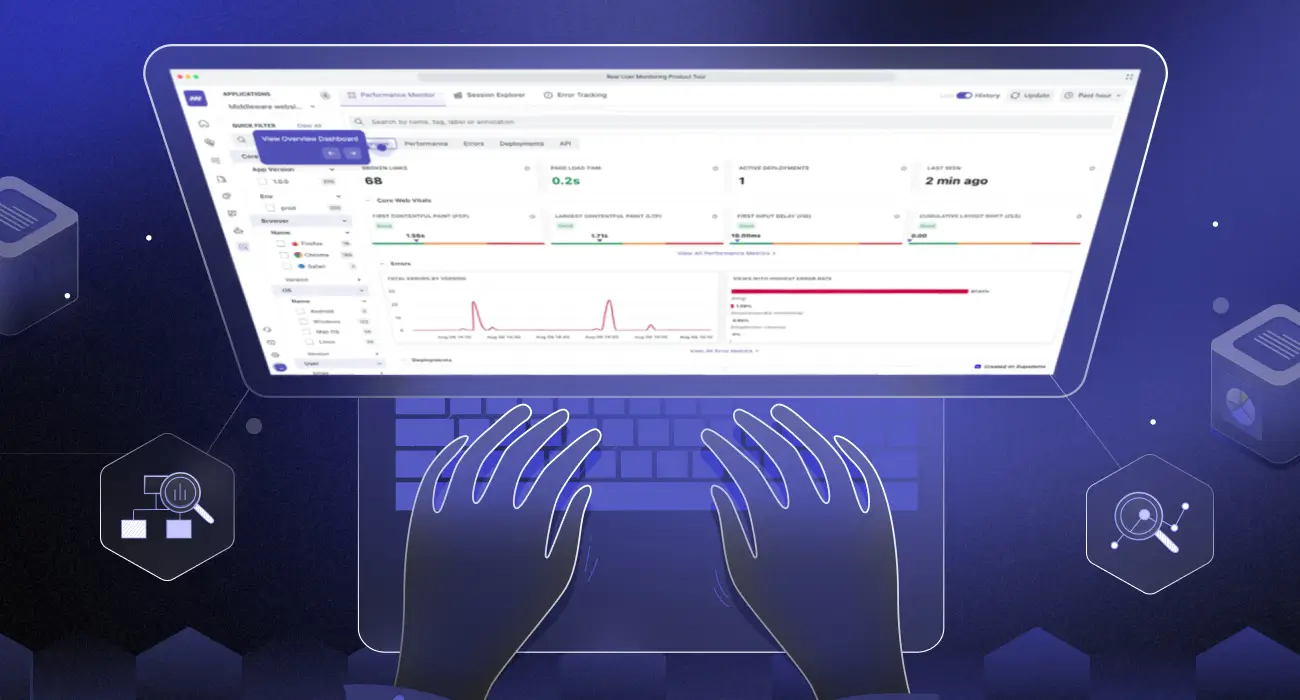
Top 8 Real User Monitoring (RUM) Tools in 2026
Real User Monitoring (RUM) tools collect real-time data from actual user sessions to measure application performance, interactions, and errors across browsers, devices, and networks. RUM provides visibility into page load speed, Core Web Vitals, network conditions, and frontend issues across devices, browsers, and locations, revealing performance gaps not visible in backend monitoring or test environments.…
-
Best 9 ServiceNow (Lightstep) Alternatives for Observability in 2026
Lightstep is officially discontinued, leaving teams to find a reliable replacement. This guide compares the best Lightstep alternatives in 2026
-

Best 8 Distributed Tracing Tools in 2026
Modern applications don’t run in one place. A single user request can pass through multiple services, APIs, and databases before returning a response. When something slows down or breaks, it’s not enough to know that there’s an issue; you need to know where it started. This is where distributed tracing tools help. They track requests…
-

The 10 Best Log Monitoring Tools in 2026 (A Comparison Guide)
Searching for log monitoring tools usually means something has already gone wrong in your current setup. Maybe you’re struggling to debug production incidents because logs are scattered across a dozen services, making every “Mean Time to Recovery” (MTTR) feel like an eternity. Or your observability bill is creeping up every month, but your visibility isn’t.…
-

OpenTelemetry Vs Prometheus: A Complete Comparison Guide
Discover the differences between OpenTelemetry Vs Prometheus, their use cases, integration options, and how platforms like Middleware offer a simplified observability solution.
-
Why Businesses Are Migrating From Datadog to Middleware
Discover why companies are migrating from Datadog to Middleware; cut costs, reduce noise, and gain full observability without sacrificing features or control.
-

Grafana vs Datadog Comparison Guide : Features, Pricing, Use Cases
Grafana vs Datadog: Which observability tool suits your needs best? Compare features, costs, and use cases and see why Middleware could be a better alternative.
-

Kibana vs Grafana: Comparison Guide for Monitoring, Visualization, and Alerting
The process of monitoring large data volumes serves multiple essential purposes, including system maintenance, early anomaly detection, and informed decision-making. The process of data understanding becomes simpler through visualization tools, which transform raw logs, metrics, and traces into dashboards and charts that users can easily understand and take action on. The open-source tools Kibana vs…
-

Grafana vs New Relic: Which Observability Tool Is Right for You?
Modern systems are not as simple as they used to be. Today, you’re working with microservices, containers, cloud infrastructure, and different tools, generating all kinds of data. When something breaks, you need more than monitoring; you need a clear view of everything that’s going on. That’s where observability tools come in. They help you track…
-
10 Best Pingdom Alternatives for Modern Website Monitoring
A simple internet search for a website monitoring tool will likely lead you to a Pingdom alternative if you’re looking beyond the basics. Pingdom is a website monitoring solution used to monitor the uptime, availability, and performance of websites and web applications. It offers tools to verify site accessibility and proper functionality for users. With…
-

Prometheus vs Grafana vs Middleware: The Right Monitoring Tool?
System monitoring is no longer a luxury, it’s a necessity. With infrastructure spread across platforms and constant changes, understanding your tech stack is critical. Whether you’re using Prometheus, Grafana, or Middleware, the right monitoring can mean the difference between smooth operations and costly downtime. But with so many options, how do you choose the right…
-
Top 5 Alternatives to SolarWinds in 2026 (With Pricing & Features)
SolarWinds is a widely used solution for monitoring IT infrastructure. It helps manage system health, monitor network traffic, and send alerts when problems arise. However, despite its popularity, many teams are now exploring SolarWinds alternatives. This is primarily due to high costs, complex setup requirements, and scalability limitations, which make it less suitable for some…
