Category: Engineering
-
AWS Lambda Functions in Python: A Practical Guide
AWS Lambda is a serverless compute service that runs your code in response to events, without requiring you to manage any servers. Developers use it for event-driven and short-running tasks like processing file uploads, handling API requests, and running scheduled jobs. The code you deploy to Lambda is called a Lambda function, and it handles…
-
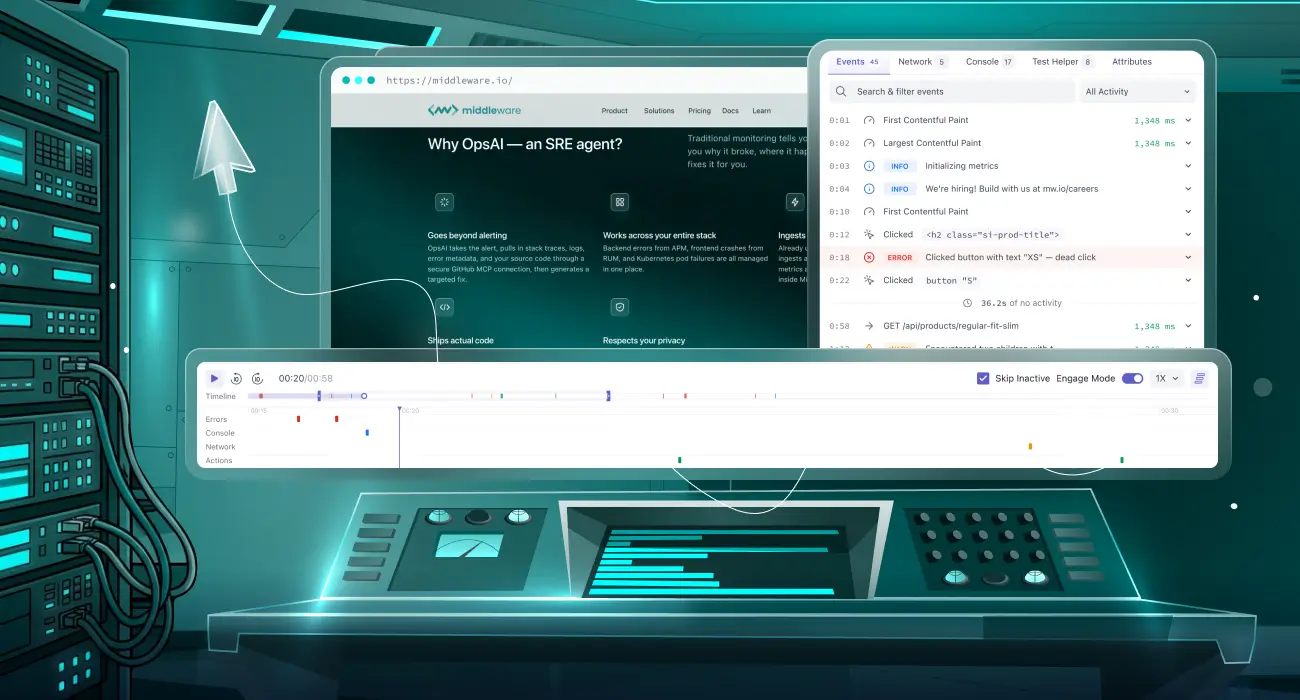
Session Inspector: See Exactly What Happened In Any User Session
A session replay only gets you halfway to a fix. Watching what a user did is useful. But on its own, it doesn’t tell you which request failed, what error fired, or whether the user was already stuck before things broke. Without that context, a recording is just a video with no explanation attached. You…
-

How to Monitor Docker Memory Usage
You deploy a container, then check on it a few hours later, running docker stats out of habit. It reports 340 MiB of memory used against a 512 MiB limit. All seems fine. A later check shows the number has risen to 410 MiB, even though traffic hasn’t budged. Is the app leaking, or is the Linux…
-
Trace Explorer Gets a Smarter Way to Investigate Distributed Traces
When a request fails, it rarely fails in one place. It moves through multiple layers: network, application code, and database, with each layer adding its own step to the journey. When something breaks, the hard part is finding exactly which layer, which step, and which downstream call actually caused it, not just that the request…
-
How Middleware Minimizes False-Positive Alerts
False positive alerts cost teams more than most people realize. Teams routinely receive over 1,000 alerts a week, and only 2 to 5% are worth acting on, according to Middleware founder & CEO Laduram Vishnoi. We built false positive alert detection into OpsAI to fix that. It checks every alert as soon as it fires…
-
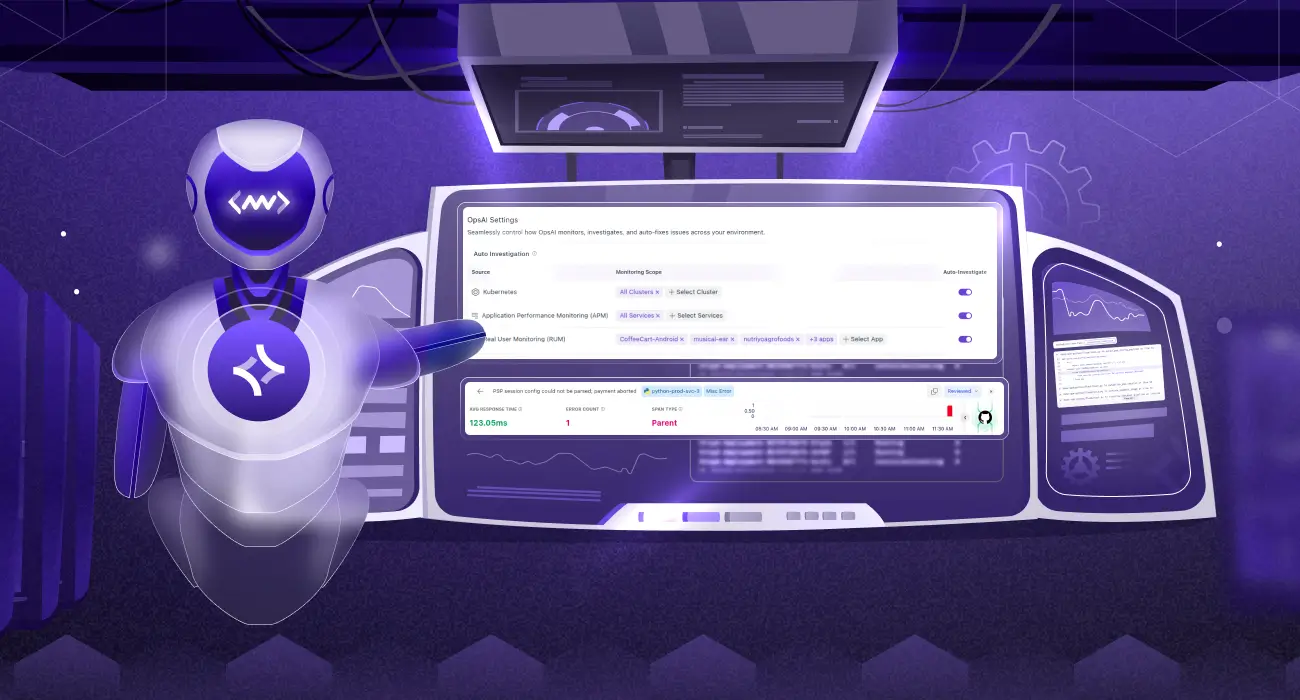
Auto-Generated Postmortems and RCA Summaries: How OpsAI Builds the Incident Timeline So You Don’t Have To
Post-mortems are one of the most valuable SRE practices. They are also one of the most consistently skipped. The reason is structural. Writing an accurate postmortem means reassembling an incident timeline days after it happened, from incomplete memory, scattered Slack threads, and dashboards that have already rolled over. The result is a postmortem that is…
-

7 Reasons DIY AI Agents Fail at Production Root Cause Analysis
Pointing a frontier model at your logs makes a great Friday demo. Running it against a real Sev1 at 3 am is a different problem entirely. There are broadly seven gaps that emerge when engineering teams build their own AI SRE agent: fragmented telemetry, Kubernetes opacity, shallow reasoning without an evidence chain, missing tribal knowledge,…
-
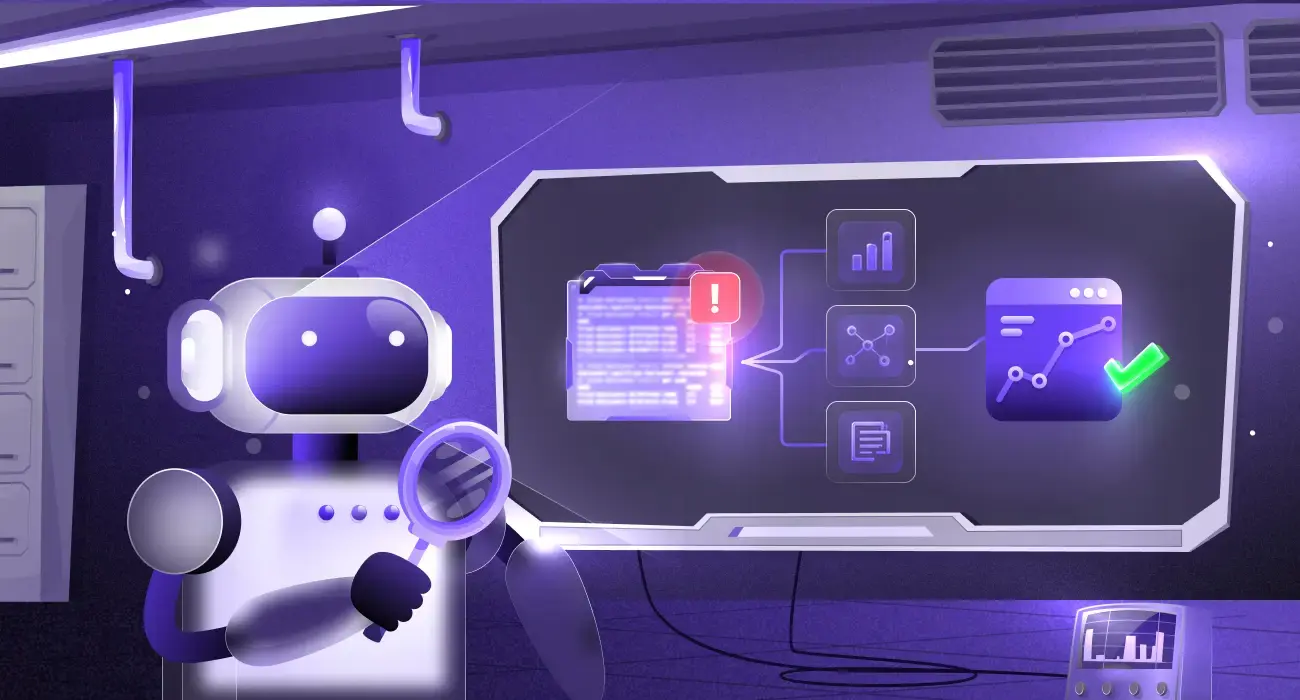
Run Production Ahead of the Alert: How an AI SRE Agent Works From Inside Your Observability Platform
Your on-call engineer spends nearly 60% of their week hunting root causes that already happened, while the failed deploy that started it all never triggered a single alert. OpsAI is Middleware’s AI SRE agent: it watches your Kubernetes, APM, RUM, and log telemetry continuously, catches the failures that don’t page anyone, and turns the cause into…
-
How to Upload Source Maps for Real User Monitoring So Stack Traces Aren’t Minified
Source maps are JSON files that map your minified, bundled JavaScript back to the original file and line number you wrote. Real User Monitoring (RUM) tools use them to turn a.js:1:48213 into checkout/validateCard.ts:42. This guide covers why minified traces show up, how upload-and-match works, and how to automate it in CI/CD. The real challenge isn’t…
-
Incident Correlation: How to Automatically Group Related Alerts From the Same Root Cause
Incident correlation automatically links alerts, logs, traces, and metrics from the same failure into one incident, instead of paging on each signal separately. This article covers how correlation works, the main grouping techniques, and how to apply them when one outage floods your on-call channel with dozens of alerts. The core trade-off is speed versus…
-
Auto-Fixing API Errors Before They Hit Users: How OpsAI Correlates APM Traces and Frontend Sessions
A payment API times out, a checkout throws a 500, and your dashboards stay green the whole time. That’s not a monitoring gap, it’s a structural one: backend alerting only sees aggregate metrics, not what a single user just experienced in their browser. Middleware OpsAI closes that gap by correlating APM traces with RUM sessions…
-
AI SRE Agent for On-Call Engineers: How OpsAI Cuts MTTR From Hours to Minutes
On-call engineering is one of the hardest knowledge-transfer problems in software, and most AI SRE agent for on-call engineers conversations start in the wrong place. A junior engineer inherits a production system at 2 AM with a P1 alert firing. They have no context for why the service behaves the way it does. Traditional runbooks…
