Tag: AI
-
Bring Observability Directly Into Your IDE with Middleware MCP Server
Summary Every time an alert fires, most developers open four tabs before they write a single line of code. Middleware MCP Server eliminates that pattern by connecting AI-powered IDEs directly to your observability data via 21 structured tools that cover APM, logs, metrics, traces, dashboards, error tracking, and incidents. Investigation, triage, and root cause analysis…
-

Why Middleware Earned G2 Recognition: Real Users Explain the Impact
TL;DR Middleware earned G2 recognition based on verified reviews from DevOps engineers and SREs at organizations ranging from startups to enterprise IT. The most cited benefit is unified observability replacing three to five siloed tools with a single correlated view of logs, metrics, traces, and RUM. Native OpenTelemetry integration covers Go, Python, Java, and other…
-
Bring AI Inference Into Your Full-Stack Observability With the TrueFoundry AI Gateway Integration
Getting AI models into production is one challenge. Knowing what they do once they’re there is another. Every inference request carries information you need: latency, token usage, model behavior, finish reason. But wiring observability into each model and provider usually means repetitive, custom instrumentation for every integration. We built Middleware to remove that work. With…
-
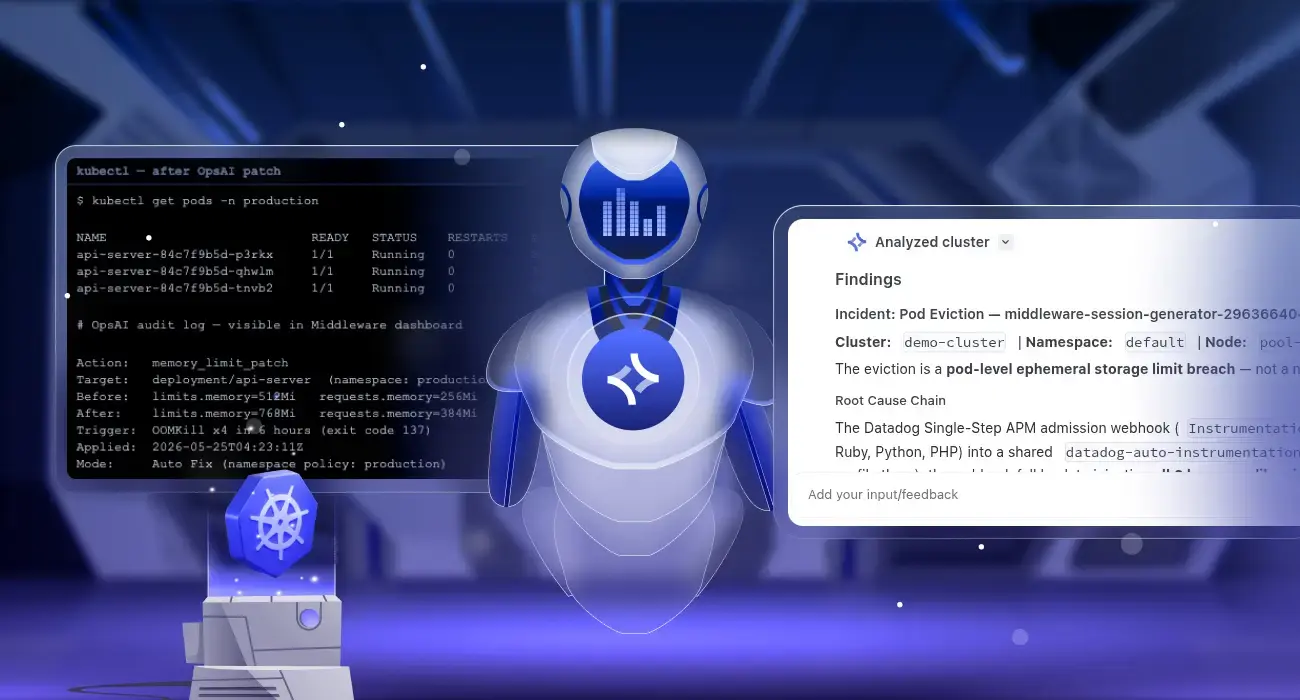
Kubernetes Self-Healing: Automatic Pod Crash Remediation with OpsAI
Kubernetes pod crash auto-remediation is the ability to automatically detect why a pod crashed and apply a permanent fix without human intervention. Middleware OpsAI does this by monitoring Kubernetes events, pod metrics, and container logs in real time, diagnosing the root cause of each failure, and patching the cluster directly, for example, raising a memory…
-
How AI Is Changing the Way DevOps Teams Debug Production Issues
TL;DR AI compresses the gap between “something’s wrong” and “here’s why” — without replacing engineers Middleware OpsAI is an AI agent that detects, investigates, explains and fixes production incidents automatically Anomaly detection catches issues before they cross alert thresholds Log clustering + natural language queries replace manual log searching Automated root cause analysis cuts 30-minute…
-
How We Built an AI SRE Agent That Troubleshoots Production Issues Like a Team of Engineers
We built OpsAI because investigating a production incident has become one of the hardest cognitive tasks in software engineering, and the industry’s answer has been to add more dashboards. That’s the wrong answer. As distributed environments grow, the signals get noisier, failures span more systems, and Kubernetes adds layers that nobody fully understands at 3…
-
11 Best AI SRE Tools & Agents in 2026
AI SRE tools/agents are software systems that use large language models(LLMs) and observability data to detect anomalies, investigate root causes, and automate remediation during production incidents. SRE agents integrate with telemetry sources such as APM, logs, and infrastructure metrics to correlate signals across services. In practice, they automate work that SRE teams traditionally perform manually,…
-
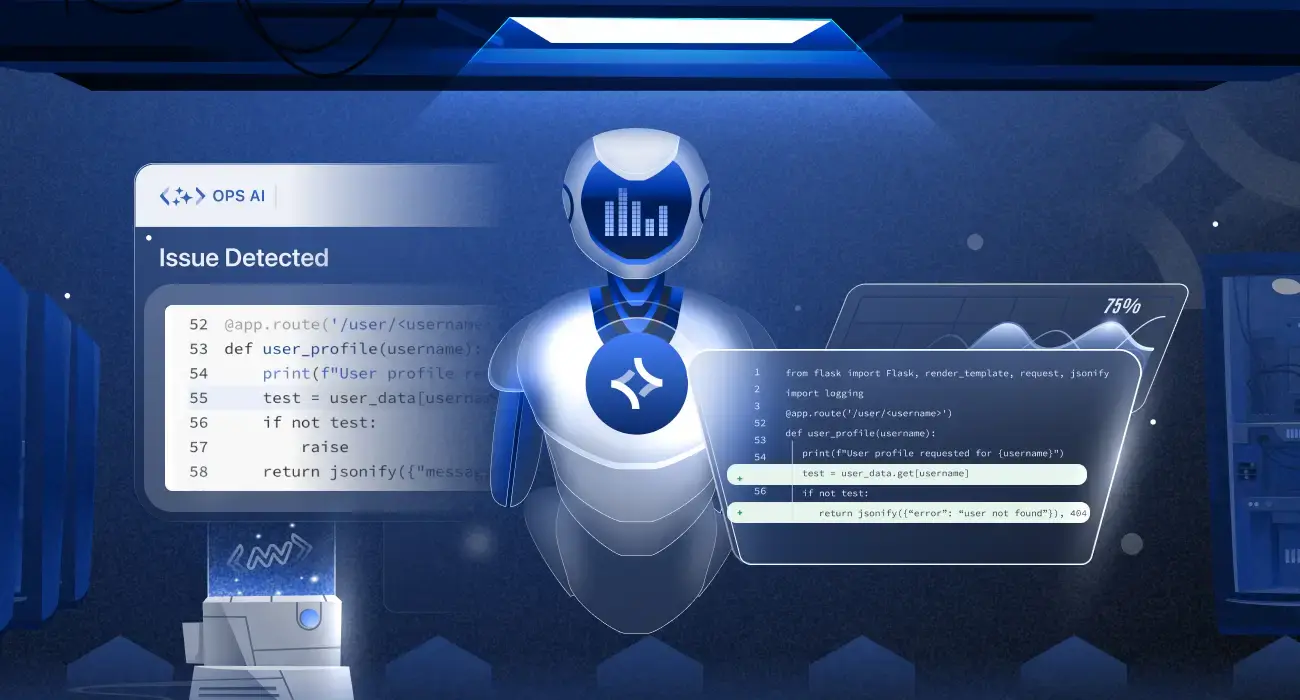
Introducing Middleware OpsAI: The AI SRE Agent That Resolves Production Issues Before They Reach Your Users
Summary: OpsAI is Middleware’s AI-native SRE agent that detects, diagnoses, and fixes production issues across APM, RUM, Logs, Kubernetes, and even third-party tools like Datadog and Grafana. Built on top of Middleware’s full-stack observability platform, OpsAI doesn’t just tell you something broke — it tells you why, where, and ships a pull request with the…
-

OpsAI vs Resolve AI: A Real-World Performance Comparison for SRE and Agentic Observability
Summary: We ran seven identical prompts through Middleware OpsAI and Resolve AI, covering use cases across Grafana, Datadog, APM, RUM, and Kubernetes. OpsAI won six out of seven rounds most often by a 6× to 10× margin and delivered actionable output like runbooks, kubectl commands, and ready-to-merge pull requests. Resolve AI performed well in isolated…
-
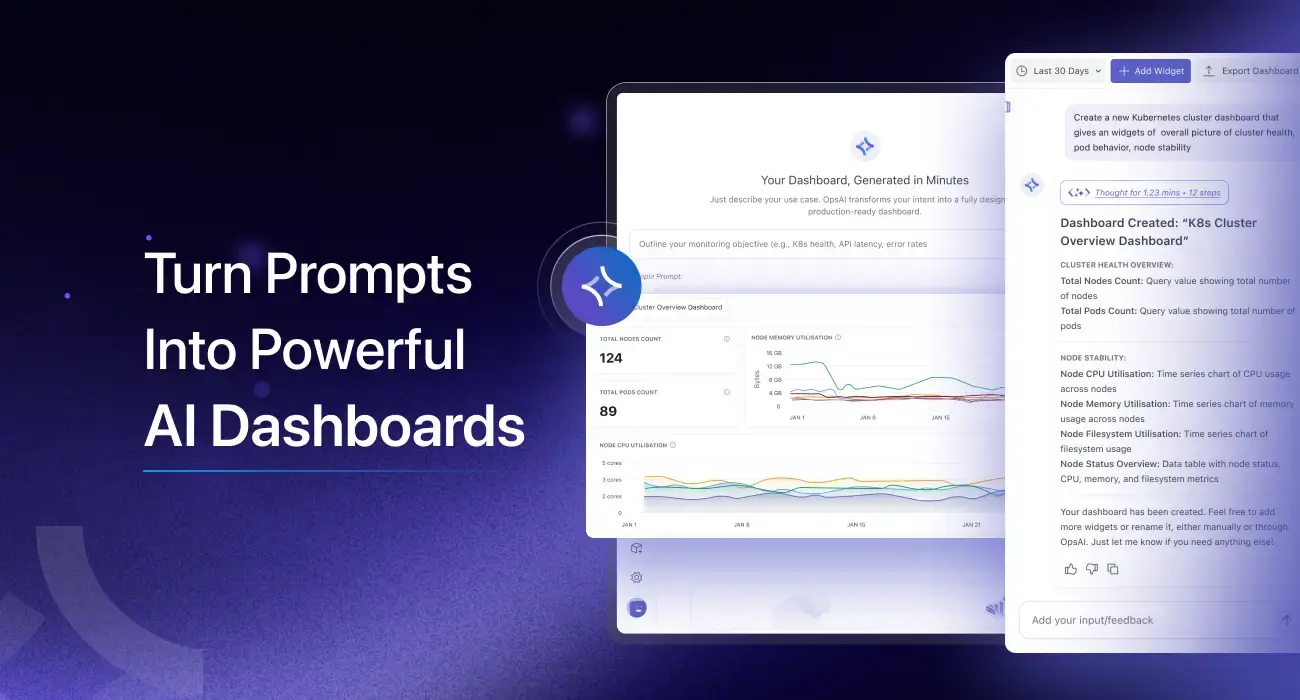
Announcing the Fastest Way to Build Dashboards with Middleware AI
Introducing Middleware AI Dashboard Builder: the easiest way to create production-ready observability dashboards from natural language prompts.
-
Real-Time Anomaly Detection in AI Models
Learn how real-time anomaly detection works in AI systems. Identify data drift, model performance issues, LLM failures, and GPU anomalies using metrics, traces, and logs with observability platforms like Middleware.
-

What Are AI Agents? A Comprehensive Guide
AI agents detect, analyze, and fix issues on their own, helping DevOps teams save time, reduce errors, and focus on strategic work.
