Tag: Containers
-
How to Monitor Docker Memory Usage
You deploy a container, then check on it a few hours later, running docker stats out of habit. It reports 340 MiB of memory used against a 512 MiB limit. All seems fine. A later check shows the number has risen to 410 MiB, even though traffic hasn’t budged. Is the app leaking, or is the Linux…
-
Incident Correlation: How to Automatically Group Related Alerts From the Same Root Cause
Incident correlation automatically links alerts, logs, traces, and metrics from the same failure into one incident, instead of paging on each signal separately. This article covers how correlation works, the main grouping techniques, and how to apply them when one outage floods your on-call channel with dozens of alerts. The core trade-off is speed versus…
-
AWS Fargate vs. Lambda: 6 Differences and How to Choose
Choosing between AWS Fargate and AWS Lambda usually comes down to one question: do you need to run a container, or just a function? Fargate runs your existing container images without you touching an EC2 instance. Lambda runs short bursts of code with no container involved at all. Match the compute to the workload and…
-
Docker Status: How to Check If Docker Is Down and Fix Common Errors
Docker status isn’t one thing. When a container looks off, you’re never sure whether to check the daemon, the container itself, or the app running inside it, and there’s no single docker status command that just tells you. This guide gives you the exact command for each of the three status types, so you can find what’s…
-
Podman vs Docker: Which Container Runtime Wins in 2026?
Summary: Podman and Docker both run OCI-compliant containers, but they solve the problem in fundamentally different ways: Docker centralizes everything through a root-privileged daemon, while Podman runs each container as a daemonless, rootless user process. That architectural split drives nearly every other difference in this comparison, from security posture to startup speed to Kubernetes alignment.…
-
AWS ECS vs EKS: What’s the Difference and Which Should You Choose?
Summary: Use AWS ECS if your team wants AWS-native simplicity, lower operational overhead, and no per-cluster fee. Use AWS EKS if you need Kubernetes portability, the CNCF tooling ecosystem (Helm, Argo CD, Istio), or fine-grained autoscaling like KEDA and Karpenter. Both run on EC2 or Fargate, both are production-proven at massive scale, and neither is objectively…
-
Docker Health Checks: How to Monitor, Configure, and Troubleshoot Container Health
Docker health checks are used to determine if an application running inside a container is actually functioning correctly and not just if the container process is running. A container can appear “up” while its application is unresponsive, misconfigured, or unable to reach required dependencies. Health checks solve this gap by actively validating real application behavior.…
-
13 Best Docker Monitoring Tools for Every Stack in 2026
Docker monitoring tools track the performance, health, and resource usage of Docker containers, images, and hosts in real time. Teams use them to detect issues before containers crash, optimize resource consumption, and maintain reliable containerized applications. These tools range from single-purpose log viewers to full-stack observability platforms. What makes them different is the signals they…
-
Docker Swarm vs Kubernetes: Complete Comparison for Container Orchestration
Docker Swarm and Kubernetes are two of the most prevalent container orchestration solutions when teams begin considering one. While these two tools address the same fundamental issue, they do so in quite different ways. In 2026, choosing between these two tools may affect your infrastructure, your team’s workflow, and your future expenses. Docker Swarm is simpler…
-
How to Manage Docker Container Logs for Monitoring & Troubleshooting
Learn how to manage Docker container logs effectively to streamline monitoring, troubleshoot issues faster, and optimize application performance.
-
What is Container Monitoring?
Container monitoring helps track the health, performance, and security of containerized applications. Learn its importance and best practices for effective management.
-
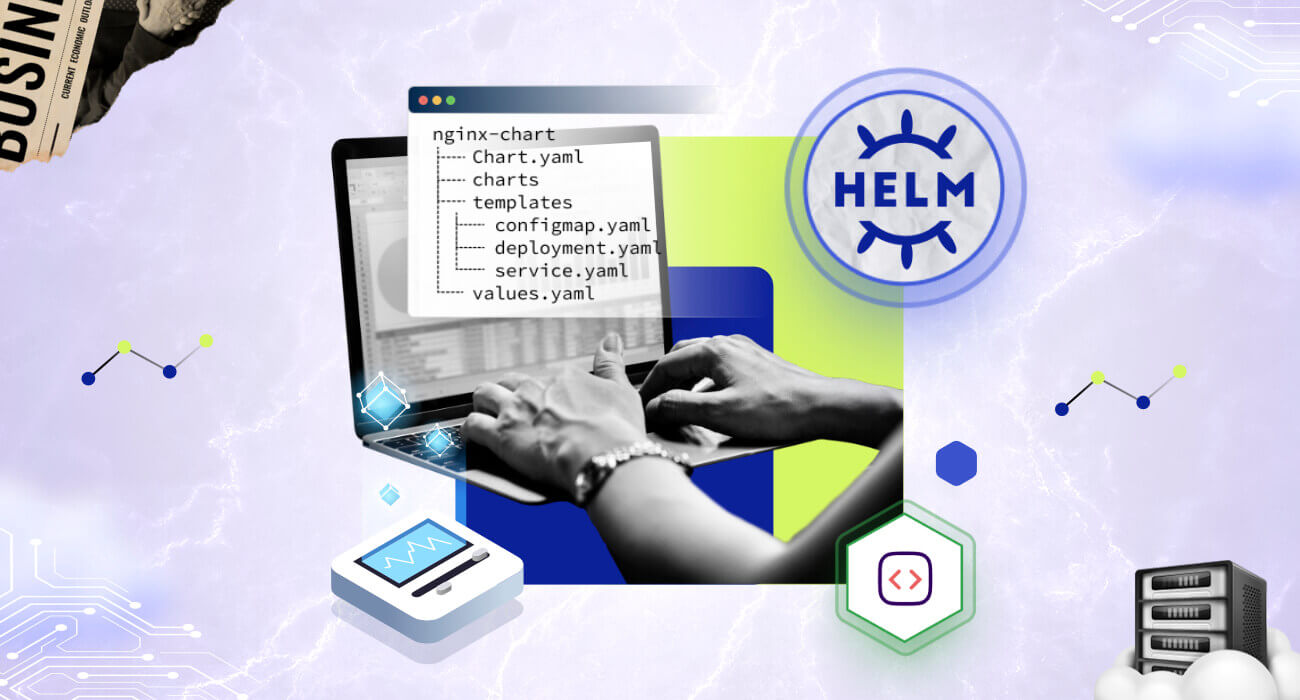
Helm Chart Tutorial: A Complete Guide
In this article, learn what Helm chart is, how to deploy, validate and update it along with best practices to do it the right way:
